Sarah Leibovitz
Supervising Producer, Soundside
About
Sarah is supervising producer on Soundside, KUOW's noontime show. She's produced shows on topics ranging from maritime law to the Ukraine invasion to why people like board games. Prior to working at KUOW, Sarah was lead producer at the Seattle podcast production company Larj Media, and a teaching artist with Path with Art.
Sarah is an alumna of The Evergreen State College and Bard College at Simon’s Rock. You might have heard her DJing on KAOS community radio in Olympia if you were listening at 5 a.m. on Sundays. When she’s not working, Sarah enjoys spending her time attempting various craft projects, hanging out with her cat Angus, or skateboarding around the neighborhood.
Location: Seattle
Languages: English
Pronouns: she/her
Podcasts

Stories
-

Steep terrain, high winds, and dry conditions make Bolt Creek Fire difficult to contain
The Bolt Creek Fire started early Saturday morning north of Skykomish. Tesidents who fled the path of the fire describe ash falling from the sky. Smoke blotting out the sun. Highway 2 is still closed between Gold Bar and Skykomish and an evacuation notice remains in place for Index.
-
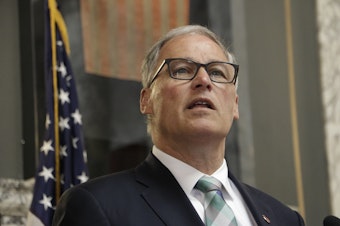
'New opportunities we didn't have before' – Gov. Inslee talks climate policy
Washington is phasing out the sale of new gas powered vehicles by 2035. Governor Jay Inslee announced that decision just over a week ago. It's one of a number of climate-based policies we've seen both here in Washington, and across the country in recent weeks. Governor Inslee ran on the need to address climate change in his 2020 presidential campaign. But - big as they are, are these latest steps big enough?
-

Should Sec. of State, the 'junk drawer' of state government, be nonpartisan?
The Secretary of State is an interesting job. In a lot of ways, it’s pretty administrative. They supervise the state archives. They coordinate implementation of the state's records management laws. But what they've become most well known for is supervising and certifying state and local elections. Some say, to do that job properly, the position should be nonpartisan.
-

Sound it Out: Listeners sound off on ranked choice and approval voting
One of our primary missions for Soundside is to make sure you're not just hearing US when you listen. You're hearing yourself, too. YOUR questions, YOUR thoughts - because you're our neighbors, you're the folks we make this for. This time, we're discussing the feedback you gave us two stories we did about potential changes to Seattle's voting system.
-
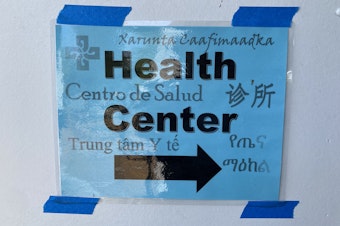
‘You have to start from scratch.’ Navigators at the World School guide students through the health-care maze
The Seattle World School in the Central District is gearing up for the new school year. Teachers are prepping for classes, lockers and classrooms are being cleaned out and readied to welcome new students. And, at the school's health clinic, two patient navigators are preparing to help students in a different way.
-

What it takes to 'make it' in Seattle's hip-hop scene
Carving out a music career in any city is tough, and there are going to be highs and lows. But being a hip hop artist in Seattle comes with its own set of challenges.
-

Changes in law enforcement may be leading to fewer guns at home
The City and County of Spokane have seen an unprecedented number of gun removals so far this year. And while there are different reasons a person can have firearms removed from their home, some of this increase appears to be driven by a change in how courts are treating domestic violence protection orders.
-

A new clinic brings Indigenous health care to Pioneer Square
Last week, a new clinic opened its doors in Pioneer Square. The Seattle Indian Health Board's newest center is located on the bottom floor of the new ?ál?al building, which means home in Lushootseed – at the Chief Seattle Club. And with it's creation, people will now be able to receive wraparound services at the club that are all managed and run by Indigenous people.
-
Sound it Out: The stories that grabbed your attention this week
If you've heard the show before, you know we often ask for your thoughts about our stories — where they've succeeded and where they can improve. That's because at its core, Soundside is about connecting with our listeners and bringing you stories you care about and journalism that impacts those of us living here in the Pacific Northwest.
-

The future of renewable energy may lie in organic waste
There are lots of forms of renewable energy out there. But Snohomish County is investing in something different — a kind of renewable energy you may not have heard of before. It starts out in the fields of a local dairy farm.