Can Seattle's next mayor bring down the cost of rent — or pizza?


In the Seattle mayoral race, many voters are focused on the cost of living in an ever-more-expensive city. They’re pressing the candidates on who can build more housing and make the city more affordable.
Incumbent Mayor Bruce Harrell is seeking a second term. Katie Wilson, the founder of an advocacy group called the Transit Riders Union, came out ahead in the primary and is hoping to unseat him in November.
In one campaign ad, Wilson takes aim at affordability in Seattle, through the lens of a pizza restaurant on Capitol Hill that charges $8 a slice.
“Not faulting the folks who sold it to me,” she tells viewers, “that’s kind of just what pizza costs these days, what food costs in Seattle these days — it’s crazy expensive!”
Wilson’s explanation is that those restaurant prices are related to scarce housing. She said employers have to pay more to retain workers whose own living expenses are too high, and she pledges to build more housing if she's elected.
Sponsored
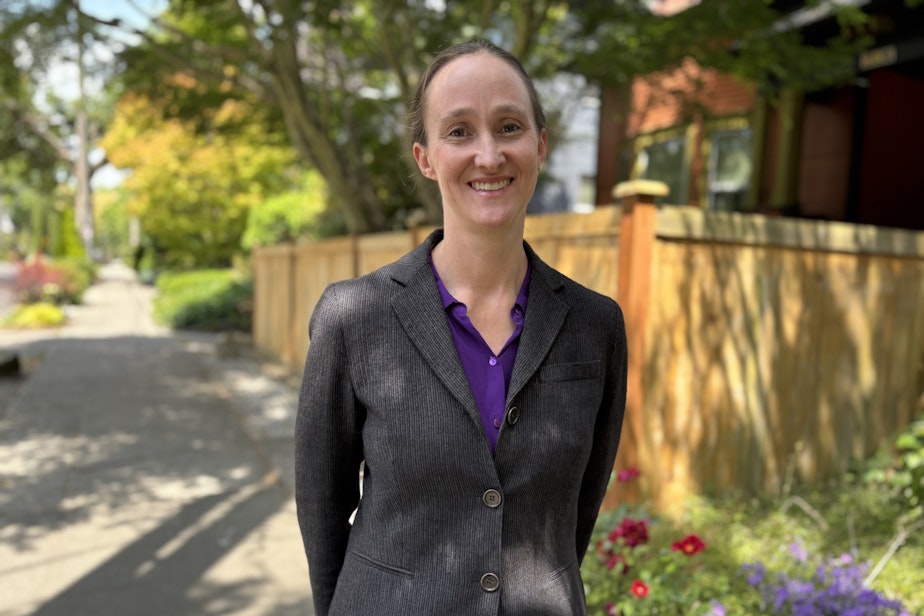
The high costs of food and housing are weighing heavily on voters as the mayor’s race enters its final weeks. Stacey Jones is a teaching professor of economics at Seattle University who checked out Wilson’s ad.
“I don’t know if it would lower the cost of pizza," Jones said, "But I think a strong case can be made for more housing density."
Jones studies economic inequality — which has been growing in King County since the pandemic. Jones said she might use this pizza ad to help her students understand theories of supply and demand.
“You’d say it’s a supply-side explanation for why pizza costs a lot, right,” she said. “It’s because one of the inputs costs a lot. And that input is labor.”
Sponsored
Jones said a “demand-side” explanation would be that there are a lot of people in Seattle who don’t blink at paying $8 for a slice of pizza. Those high earners affect affordability for everyone.
Meanwhile, restaurant owners say they’re barely hanging on themselves, despite these high prices.

Charlie Anthe owns Moshi Moshi Sushi in the Ballard neighborhood. He also chairs the Seattle Restaurant Alliance, which has endorsed Bruce Harrell.
Anthe said Seattle’s staggering restaurant prices were brought home to him on a recent trip to Hawaii, a place also known for expensive food.
Sponsored
“The prices at the hotel — which is a tourist’s markup nightmare — were cheaper than going to a diner in Seattle," he said. "And that was the moment when I realized that Seattle had gotten out of control."
Anthe said the prices reflect one of the highest minimum wages in the country — it’s currently $20.76, and it goes up to $21.30 in January.
Anthe said labor costs are typically a third of a restaurant’s budget, but in Seattle they’re more like 40 to 50%, “and when you get up to a number that high, everything else starts to break.”
Anthe said he knows housing is the biggest anxiety for his staff and he supports city officials’ efforts to create more.
“We wholeheartedly agree that one of the biggest things that the city needs to do is find a way to reduce the cost of housing," he said. "From our perspective that’s simply, you have to build more housing.”
Sponsored
Coming off a shift at the Fred Meyer on Lake City Way, Melissa Rose would agree.
“Housing is…probably the greatest problem of the 2000’s,” she said.
Rose has worked five years at the store and is also a steward for United Food and Commercial Workers Local 3000, which endorsed Katie Wilson for mayor.
Rose said she and her spouse “lucked out” because their income qualified them to rent one of the city’s 6,600 subsidized units funded by a property tax exemption for developers.
They pay $1,650 per month for a 500-square foot studio apartment in the Lake City neighborhood.
Sponsored
"This is a lower-income area, this is someplace where two people who are working retail can live," Rose said.
At Fred Meyer, Rose has also had an up-close view of rising food prices. Those prices are changing what she can afford to eat — no more ground beef, for example — and she knows it affects the many retirees and immigrants who shop there.
Rose said people in the senior housing complexes nearby already flock to discount days.
“It’s a running joke that senior Tuesdays at Lake City are just a complete nightmare," she said.
But now these seniors will have to seek out groceries elsewhere. Parent company Kroger is closing the Lake City Fred Meyer this month, along with three other stores in the area.
Rose said the closure is a blow to food access and community in a dense neighborhood.
So, what can the city’s mayor actually do about these issues?
Katie Wilson said the city may not be suited to running a grocery store, but perhaps it could partner with a grocer who wants to serve that neighborhood.
"It’s very unfortunate," she said, "and I do think that it’s worth exploring a public option grocery store — figuring out what the city can do to help fill that gap and make sure we don’t have a food and pharmacy desert in that neighborhood."
Wilson has more detailed proposals to address housing costs. For one thing, she wants landlords to pay moving expenses if they raise the rent more than 5%. And she wants to add higher housing density in pockets all across the city.
“I think you look at the comprehensive plan that the mayor’s office transmitted and it doesn’t go nearly far enough in allowing for building the housing that we need over the next 10 to 20 years,” Wilson said. “So I am in favor of creating more neighborhood centers where multifamily building is allowed.”
Wilson said it’s not too late to seek those changes next year.

For his part, Bruce Harrell says the new comprehensive plan is already on course to vastly increase the city’s housing supply.
"The comp plan that we proposed brings on a lot more inventory: 330,000 units which came from a base of 120,000 units," he said. "So we more doubled where we can build here and by that we relieve the pressure on the price of a home."
Harrell said he’s scrutinizing all the ways city offices can play a role when it comes to facilitating more housing.
“Everything that I can control — whether it’s permitting, housing inventory, utility taxes — we’ll make sure we do what we can do," he said.
Research by the Pew Charitable Trusts found that adding housing — even for high-income residents — helps slow rent increases for older, more affordable units. But Harrell said Seattle is still the fourth fastest-growing city in the country, so it’s hard to stay ahead of that incoming population.
When it comes to food prices, Harrell said he doesn’t support city-run grocery stores. He does support the city’s recent changes to allow more stores in neighborhoods.
“What we think makes all the sense in the world is to get as many corner grocery stores as possible, getting fresh food in there, giving them startup money to do that, and we changed the zoning laws to allow that kind of expansion," he said.
But, it takes years to add more housing and neighborhood stores.
In the near term, Harrell has included measures in his proposed budget that Wilson said she also supports, like more funding for food banks and the city’s Fresh Bucks program, which gives participants a monthly stipend to buy fruits and vegetables in participating supermarkets and farmers’ markets.
Wilson said if elected she wants a Seattle that is open to all, especially working people, youth, and elders.
Harrell said, if reelected, he wants a Seattle where people of limited means, like his own parents if they were alive, could still afford to live.
-
Amy Radil

Reporter
Amy Radil is a reporter at KUOW covering politics, government and law enforcement, along with the occasional arts story.
More stories from Amy Radil »


