Hit back or leave it alone? Canadians respond to new Trump tariffs
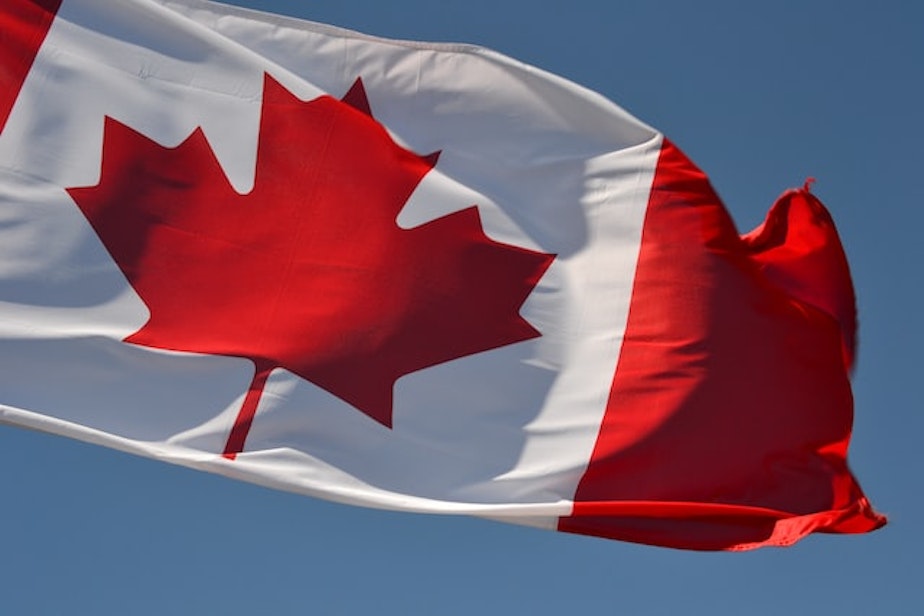

No deal is better than a bad deal. That appears to be the consensus among political and business leaders in Canada, after President Donald Trump applied new tariffs on Canadian imports that aren't covered by a 2018 free trade deal. While other countries rushed to make trade deals, Canadian leaders determined they could not agree to one — yet.
To catch up with how all of this is being processed in British Columbia, and some other topics, KUOW’s Kim Malcolm talked to Vancouver-based journalist Michelle Eliot, who hosts the CBC weekday call in program BC Today.
This interview has been edited for clarity.
Kim Malcolm: Tariffs on Canadian goods that are not covered by the United States-Mexico-Canada Agreement (USMCA) have now gone from 25% to 35%. There are some exemptions, but steel and aluminum are facing 50% tariffs. Ontario premier Doug Ford said this today:
“We buy more products off the US than Japan, Korea, China, the UK and France combined. So, I wouldn't roll over. And I told the Prime Minister, do not roll over. Hit that guy back as hard as we possibly can. And that's what we need to do.”
Then you heard this from one of your listeners:
“Well, hopefully we don't impose tariffs again against him, because they only hurt the people of Canada. These tariffs he’s put on hurt the people the United States. They pay for it, not us. So just leave it alone.”
Sponsored
Is there any general agreement among Canadian leaders on how to respond now?
Michelle Eliot: I would say Doug Ford probably had the strongest words out of the leaders we've heard from so far today. Some people resonate with that. Some of our callers certainly did, who feel that anger over the way they feel Canada is being treated.
Other politicians here in BC, for example, speak more about, what are we going to do about it? How do you retaliate? How do you respond? But also, what do we do specific to the industries that are dominant in our province? Here in BC, it's lumber.
As for the Prime Minister, he has been tempering expectations in the lead up to today, so no surprise that there was no new trade agreement. But just past midnight, he issued a statement saying it's disappointing, but pointing to the current free trade agreement, which we call the Canada, United States, Mexico Agreement (CUSMA) here in Canada. He said, for the most part, many goods are covered and they can be eligible to be exempt. That's meant that any business that can be covered but hasn't been certified has been really rushing to get its certification in order, so that they can be exempt from any incoming tariffs.
We've talked before about Canadian support for boycotting US products and visiting the United States. How would you gauge how strong that sentiment is now?
Sponsored
According to the reporting I've seen, it's still going strong. We hear about grocery products, people still demanding more Canadian goods, and demanding that the labeling be accurate, that products are actually Canadian when they say they are. When it comes to travel, we heard from a commenter today who said, ‘Okay, maybe it's not about retaliatory tariffs, because there is some debate around that. But, continue the boycott, don't travel to the United States.’ So that sentiment, I think it's something that people can latch on to. They feel like this is the way that they can stand for Canada.
Let’s talk about wildfires. Washington has had a relatively mild year so far. But British Columbia has seen a huge increase. The number just doubled in the last 24 hours. How are people coping?
It's been busier. Just over the last couple of days we've seen evacuation orders, to a small extent still, but 400 properties in the Okanagan, which is so often the place that is highly affected by wildfire. I get the sense that people are used to it now. The sense is that people know how to prepare. People understand about having a go bag ready. The evacuees we've interviewed, they knew exactly what to do, and they heed the warnings to be on alert.
They have an understanding as to how to prepare, not just themselves, but also their properties, how to be what we call ‘fire smart,’ how to clear the debris from around your home. And it does seem that the summer after summer of wildfire seasons have set in this kind of knowledge and understanding that this is the new normal for us.
To finish up, you and your listeners were talking recently about a run of bear encounters. That caught my interest, because there is a controversial effort here in Washington to reintroduce grizzly bears. Talk a little bit about what's been happening in BC, and how people there are feeling about coexisting with the bears.
Sponsored
The story that caught people's attention and made headlines over this last week was a couple in the Creston Valley who had an encounter with a grizzly bear. The man was attacked and had life threatening injuries. He's gone through surgery. The wife somehow knew how to use her bear spray. They were prepared. They were using their electric bikes through this trail in Creston, and they knew exactly what to do. The wife was being hailed for know-how when it comes to bear spray, because so often people carry them in the backpack where you're going to have to rummage through in the moment and don't know how to use it.
In Creston, they actually made efforts to reinvigorate the grizzly population, and it has started to thrive as a result. So now, there's been a focus on education on how to co-exist with these grizzlies, because the sort of general sentiment is we are in their territory. So, what can we do when it comes to our fruit trees, our garbage, but also when we are out and about? Because British Columbians sure like to enjoy the back country. What can you do to be bear aware? Make noise, have that bear spray handy, but just have an understanding that you are living amongst wildlife, and you're going to have to co-exist. So a lot more awareness. They're holding sessions and seminars on that very issue.
Listen to the interview by clicking the play button above.
-
Kim Malcolm

Afternoon News Host
Kim is the local news host of KUOW's All Things Considered, airing from 3 p.m. to 6:30 p.m. weekdays. Kim covers breaking and developing daily news, both local and regional, as part of NPR's afternoon drive time programming.
More stories from Kim Malcolm » -
John O'Brien

Senior Producer, All Things Considered
John O’Brien is KUOW's All Things Considered Senior Producer. He spends his days setting up interviews with newsmakers on subjects from politics and public health to arts and culture. John learned to make radio starting in 2006 as an intern on KUOW’s The Conversation with Ross Reynolds.
More stories from John O'Brien »


