King County bans immigration detention facilities, joining other Western Washington cities
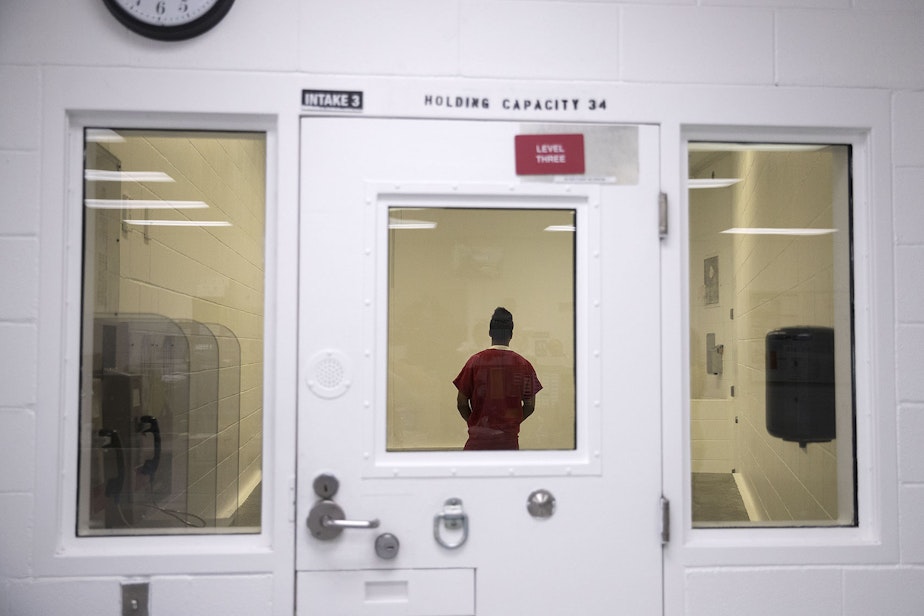

Joining other local governments across Washington state, King County has issued an emergency moratorium on new detention facilities being built or expanded in unincorporated King County.
That means potentially less land for the federal government to consider as it tries to expand immigrant lock-ups under President Donald Trump’s mass deportation efforts.
County Councilmember Teresa Mosqueda introduced the moratorium. The emergency measure will last one year and only applies to unincorporated King County. It does not apply to tribal land or cities within the county, including Seattle.
“[Detention facilities] disrupt and destroy the fabric of our communities,” she said.
RELATED: As ICE looks to expand detention facilities, several Western Washington cities consider bans
King County is home to many first-generation immigrants, and in some cities, they make up a large chunk of the population.
Sponsored
“With the detention facility comes additional agents and fewer people seeking health and safety from local law enforcement, fewer people getting their medical care needs met, kiddos missing days of school,” Mosqueda said. “That is a violation of our county's values.”
The county doesn’t have specific zoning for detention facilities, and the ones that currently exist on unincorporated county land — like the youth prison, Echo Glenn Children’s Center — are built on special-use permits. The county has not received any permits for a new detention facility so far.
“If there was an attempt to violate this moratorium, we would make sure that code enforcement officers are deployed… and if there's a [continued] violation of county code, we will absolutely try to seek compliance through agreement,” Mosqueda said.
“If they continue to not comply with the county's moratorium on any new ICE detention facilities,” she added, “we would absolutely consider civil penalties using liens on the property and future legal action if necessary.”
During the council meeting on Tuesday, Councilmember Claudia Bladucci questioned whether this moratorium would impact efforts to relocate current detainees if an existing county detention facility was flooded or lost in a fire.
Sponsored
County employees explained this moratorium would impact plans to relocate detainees, since no new facility would be built. That would create a problem for where to house detainees.
Reagan Dunn and Pete von Reichbauer were the only council members to vote against the measure.
“There's not an emergency here,” Vice Chair Dunn said. “ Moratoriums are serious tools. They're… a blunt instrument and used, I think, in the most serious situations where a serious threat will happen if a land use decision is made.”
While the legislation is “well intended,” Dunn said he believes there are other ways to “make a statement towards one specific federal agency” besides a land-use moratorium.
Dunn said he’s also concerned about possible litigation stemming from the moratorium.
Sponsored
Other council members were concerned with warehousing people and the environmental impacts for large facilities being built, pointing to a South Florida immigrant detention facility.
With the moratorium now in effect, King County Executive Girmay Zahilay will be tasked with determining what to do with detention facility planning next. That includes producing an analysis on the impact of detention facilities and recommendations for a permanent solution to be shared with the county council in early December.
Several cities in King County — like Tukwila, Renton, and SeaTac — have all passed similar measures. The City of Seattle is still working on one and the City Council plans to vote on it next week.
These are all local and city jurisdictions within what the Department of Homeland Security calls an “area of responsibility" for its Seattle regional office. But that area of responsibility also includes eastern Washington, southern Oregon, and Alaska.
Back in December, the federal government issued a document that outlined plans for a potential expansion of its detention facility footprint in this area of responsibility, though it could also be a continuation of the old contract to run the Northwest ICE Processing Center in Tacoma, which lapsed in September of 2025. In the following weeks, federal records showed they issued a series of contracts in connection to the initial request.
Sponsored
In a statement to KUOW, an ICE spokesperson said they have no new detention facilities to announce in Washington.
“All sites undergo community impact studies and a rigorous due diligence process prior to purchase to ensure there is no detrimental impacts on local utilities or infrastructure,” the statement said. “Secretary Noem aims to work with officials on both sides of the aisle to expand detention space to help ICE law enforcement carry out the largest deportation effort in American history.”
According to the Seattle Times, tribes in Western Washington have been approached to re-purpose their own detention facilities for the federal government.
In previous years, the federal government prioritized holding people at these detention facilities who were in deportation proceedings, considered a flight risk, or a threat to the community.
But now, a majority of immigrants locked up in these facilities range from people without legal status to those pursuing naturalization or citizenship — and a majority of them have no criminal convictions. In more than half of the habeas cases filed last year from Washington state — when people allege a potential violation of the constitution — judges have ruled that those immigrants in detention should either be released or given a hearing in front of an immigration judge according to InvestigateWest.
Sponsored
This week, the city of Spokane also passed a ban on detention facilities, as well as a ban on performing enforcement actions on some local government property, according to the Spokesman Review.
King County is also working on a similar measure as part of an executive order by Executive Zahilay.
RELATED: Zahilay's first executive order bars ICE from King County-owned properties
-
Gustavo Sagrero Álvarez

Race, Identity, and Immigration Reporter
Gustavo covers the intersection of race and identity for KUOW, writing stories that center voices often not catered to in typical news. He's most interested in covering how communities effect the levers of power they hold, to effect change.
More stories from Gustavo Sagrero Álvarez »


