Seattle expands video surveillance despite public concerns about potential abuse


The Seattle City Council voted 7-2 Tuesday to expand its use of video cameras by police, despite concerns that the footage could be used by the Trump administration against immigrants, protesters, and vulnerable communities.
The new legislation adds to the 65 cameras already approved in three high-crime areas — North Aurora Avenue, the area around 12th Avenue and Jackson Street in the Chinatown-International District, and in Pioneer Square along the Third Avenue bus corridor.
Additional cameras will be installed in the Stadium District, near Garfield High School, and in a section of Capitol Hill.
A second ordinance, also approved by a 7-2 vote, allows police to access data from 145 traffic cameras in Seattle.
RELATED: Washington's new work zone speed cameras cite 7K drivers in first 90 days
The votes followed a three-hour public comment session that included more than 100 people, the vast majority of whom urged council members to vote no.

Sponsored
Speaker after speaker said the expansion of video surveillance across the city was premature and not backed by adequate data or research.
They also worried that the increased surveillance could be used by the federal government to identify and detain immigrants and potentially to retaliate against nonviolent protesters.
RELATED: What ICE agents can and cannot legally do during arrests
Councilmember Alexis Mercedes Rinck, who voted against both measures along with Councilmember Dan Strauss, said she shared those concerns.

"These are the tools the Trump administration needs to enact their cruel agenda," Rinck said. "And we've seen that the federal government can access city surveillance data with or without their permission, and it can do so with ours."
During the public comment session, Tee Sannon, technology policy program director at the American Civil Liberties Union of Washington, said similar technology was already being used in other U.S. cities to enforce immigration policies.
“These technologies will not make our communities safer and they will create real harm,” Sannon said.
With that threat in mind, Council members approved an amendment to the legislation that creates a 60-day pause in the use of video surveillance if federal authorities attempt to subpoena footage for use in immigration cases.
But other amendments to limit the expansion of the cameras into certain neighborhoods or to high-traffic intersections were all voted down.
Sponsored
Councilmember Robert Kettle, the sponsor of both bills, dismissed comparisons between Seattle's surveillance program and what was happening in other cities.
He said the current legislation — as well as previous measures that allow cameras to read license plates and that establishes a centralized surveillance monitoring center — have gone through an extensive vetting process.
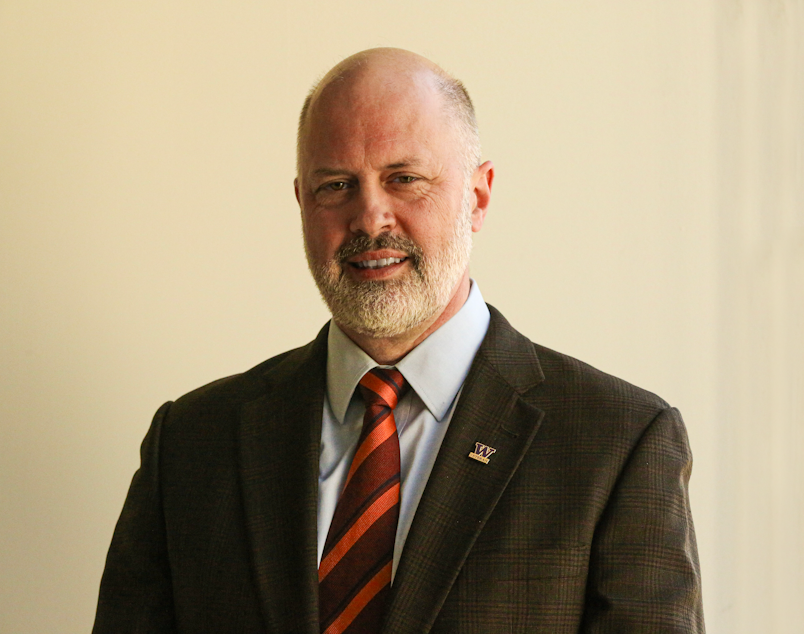
"They are not standard bills. They do not reflect what you see in other jurisdictions across the country and they are definitely not red state, red county American bills," he said. "They are Seattle bills."
The surveillance cameras are monitored by analysts at the Real Time Crime Center, launched on May 20, 2025, at the Seattle Police Department headquarters. The center operates daily from 8 a.m. to 3 a.m. with plans to expand to 24 hours a day, seven days a week in 2026.
Sponsored
In a press conference July 15, Mayor Bruce Harrell and Police Chief Shon Barnes said, in its first two months of operation, the Crime Center played a role in investigating 600 reported incidents.
Councilmember Rob Saka assured the public that guardrails were in place to protect vulnerable communities.
"This is not the end-all, be-all. It's not going to solve all our problems," Saka said. "But it will help us investigate some crimes."
But in a joint statement with two nonprofits, the ACLU Washington said it was "notoriously challenging" to prevent the use of surveillance data by federal agencies once the data was collected.
"Seattle’s immigrant communities already face unprecedented attacks in this moment," the statement reads. "Families are being torn apart, our neighbors are scared to go to work, and children fear going to school and coming home to an empty home."
Sponsored
RELATED: Wife of WA vet arrested by ICE at citizenship interview speaks out
Rinck echoed those concerns in urging her colleagues on Council to vote against the expansion of video surveillance.
"I do not want to be sitting up her in the future telling people I'm sorry we put your community in danger when we could have stopped it today," she said. "It is matter of when not if our data will be handed over to the federal government."
-
Stephen Howie

Senior Online Editor/Reporter
Stephen Howie is a Senior Online Editor/Reporter at KUOW. He is an award-winning journalist, nonfiction writer, college professor and videographer. His first book, "The Bluffton Charge: One Preacher’s Struggle for Civil Rights" won the Mammoth Books Nonfiction Prize.
More stories from Stephen Howie »


