Hot dogs, foxtails, and kittens: What pet owners should know this summer
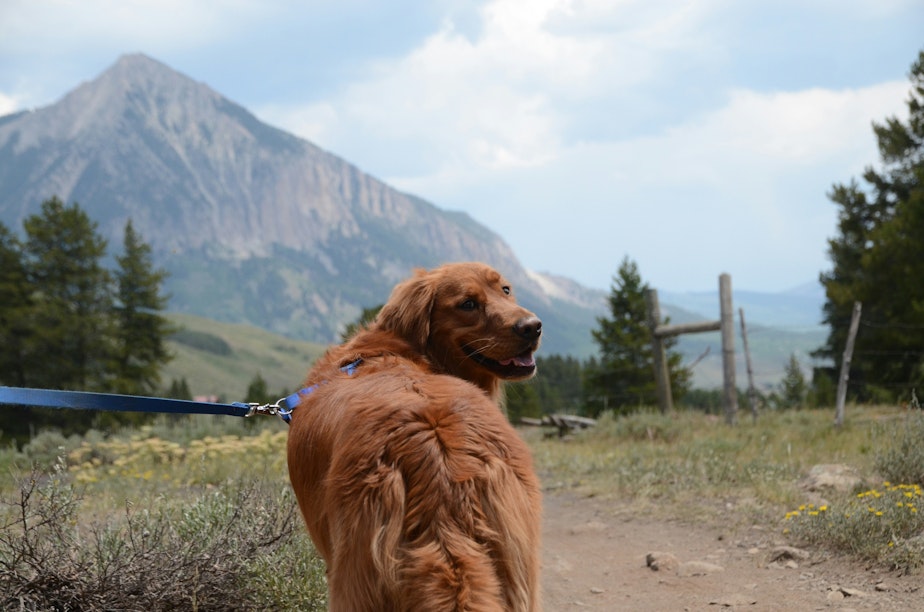

Summer is a great season for adventures with your favorite pup — the sun is shining, the lakes are glistening, and the grass is only partially dead. But just like your human kids, furry members of the family need you to keep a watchful eye out for warm weather hazards.
Soundside’s Libby Denkmann spoke with Dr. Lauren Restis, senior veterinarian at Seattle Humane Society, about what to watch out for. Here are some takeaways from the conversation.
Foxtails
Dog owners out and about with their pooches should be aware of foxtail, an invasive species of plant, Restis said. It’s a tall plant with a seed head that has little hair-like structures on the ends. Each of those hairs has tiny little barbs, and they can get stuck on a dog’s fur. Because of their fish-hook-like shape of the barbs, they only move in one direction.
“If these little seed pods get stuck in an ear or a lip or a paw pad, they can sometimes work their way into the skin, get stuck, and then we see things like abscesses, infections, and irritation from those seed pods,” Restis said.
Sponsored
She advised dog and outdoor cat owners to do a quick check for any stuck barbs after going for a walk or hike, especially in crevices.
“They’re not dangerous to remove,” Restis said. “If they haven't embedded themselves, they're not going to cause any issues, just kind of pluck them off and throw them away.”
To judge whether a barb has embedded, check for redness or if it looks like a plant is sticking out of your pup's skin. If you find either of those, Restis recommends going to your vet for more help and potential antibiotics or other medications.
Hiking
Summer is also hiking season for many Washingtonians. For those who take their dogs out on long and steep hikes, Restis suggested considering the fitness level of your pet when deciding which hike to take on.
Sponsored
Just like a person might not start with a 15-mile hike, you don’t want your furry friend trying to do something above and beyond what they’re capable of.
“We can put them in a dangerous situation if they get overheated or overexerted and they may not be able to make it back down on their own,” Restis cautioned. “Trying to figure out a way to get them back down from a hike could be sort of challenging.”
She recommended reviewing the American Veterinary Medical Association’s first aid kit checklist and then deciding what items you should bring for your trek.
Hot sidewalks
For city-based adventures on days when it reaches 80-plus degrees, Restis has noticed more dogs wearing booties to protect their paws.
Sponsored
To assess conditions for your pet, she advised “placing your hand on the pavement and after a few seconds it’s too hot for you, consider whether your dog might need a shorter walk, or being on grass, or something extra on their paws.”
Heat stroke
Brachycephalic breeds of dogs — like French Bulldogs, Pugs, and Pekingese — are more susceptible to heat stroke, due to their narrowed nasal openings.
Restis says those canine friends should take shorter walks, and have fans or air conditioning available while indoors.
Kitten season
Sponsored
The summer months are known at Seattle Humane Society as kitten season, as they see a much higher population of kittens.
“We have people bring in kittens they’ve found in their neighborhoods and they sometimes need some extra care and attention,” Restis said.
So if you’ve been thinking about getting a feline companion, this is the time of year to do it.
Listen to the full interview with Restis.
Sponsored
-
Libby Denkmann

Host, Soundside
Libby Denkmann joined KUOW in December 2021 as the host of the midday show Soundside. She’s a native Pacific Northwesterner who grew up in Redmond, graduated from the University of Washington, and covered local news as a producer and reporter with KIRO Radio.
More stories from Libby Denkmann » -
Sarah Leibovitz

Supervising Producer, Soundside
Sarah joined KUOW in 2019 as senior producer on The Record. She is now Supervising KUOW’s new noon time show, Soundside. Prior to working at KUOW, Sarah was lead producer at the Seattle podcast production company Larj Media, and a teaching artist with Path with Art.
More stories from Sarah Leibovitz » -
Jason Burrows

Producer/Announcer
Jason M Burrows is part of the Production Team on Soundside, and takes on announcing duties when needed.
More stories from Jason Burrows »
