Joshua McNichols
Reporter
About
As KUOW's Growth and Development reporter and co-host of KUOW's Booming podcast, Joshua's "growing pains" beat sits at the nexus of housing, transportation, urban planning, government and the economy. His favorite stories also include themes of history, technology, and climate change.
Joshua holds a B.A. in Architecture from the University of Washington. Public Radio is his second career; architecture was his first. He is proud of the many odd jobs he's held in his life, such as salmon fisher, author, bike courier, and bed-and-breakfast cook.
Location: Seattle
Languages Spoken: English
Pronouns: he/him
Professional Affiliations: The Society of Professional Journalists, Western Washington Chapter
Podcasts
Stories
-

Former Seattle Mayor Norm Rice and the origins of Seattle's growth strategy
Seattle is expecting a quarter million new people – by 2044. Where will they all live? We haven’t built enough new homes. Now, the city is updating its plan – for where it will build homes in the decades to come. And it’s taking a second look – at a strategy that has defined its growth over the last 30 years. KUOW’s Joshua McNichols has more – on the origin of the city’s Urban Villages strategy – and how it could change.
-

Where should Seattle build homes for newcomers?
The City of Seattle is planning for more growth, and it wants your input. Should the city keep funneling newcomers – into dense neighborhoods known as “urban villages” – or should it spread density out across more parts of the city, including neighborhoods dominated by older houses?
-

Appalled, but not surprised: Seattleites react to SCOTUS ruling on Roe
People in Seattle and across Washington state are reacting to today's Supreme Court ruling overturning Roe v. Wade, the 1973 decision that
-
Housing Density: What we're missing without a middle option
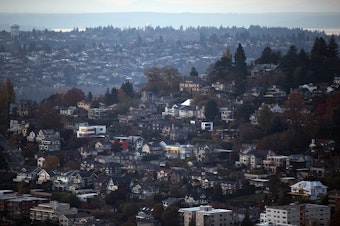
“Missing middle housing” is more affordable for people to buy. It’s called the “missing middle,” because while we’ve gotten better at building low-income housing, and the market builds a lot of expensive homes already, there isn’t a lot in the middle. KUOW's Joshua McNichols spoke with University of Washington Architecture students about their ideas to make housing more affordable and more available.
-

'Something has to change:' These architecture students are challenging Seattle's housing norms
Some University of Washington architecture students are looking at new ways to add more housing to existing neighborhoods without ticking off the neighbors. Their timing is perfect, as Seattle and other cities are currently updating their comprehensive plans, which lay out where and how they’ll grow over the next twenty years.
-

Here's what 8.6% inflation feels like
First, supply chain problems got the ball rolling. Now, the war in Ukraine has pushed up energy and grain costs. But the numbers don't tell the whole story. On the streets of Renton, Washington, people are really feeling the pinch.
-

Pandemic shopping spree creates economic windfall for rural communities
Before the pandemic, many rural counties struggled to bring in enough taxes to fund services. But a change in how we collect sales tax, followed by a pandemic, has turned things around for some of them, at least for now.
-

Unrest in the (Card) Kingdom: Employees at Seattle online Magic peddler push to unionize
In warehouses and offices in Seattle's Ballard neighborhood, 180 employees grade and box up orders of Magic the Gathering cards. They work in three shifts, including overnight, sending out 2,500 packages a day — enough to fill several UPS trucks. And like workers in other industries, they're calling for change.
-

Why Amazon Go hasn't transformed retail...yet
When Amazon Go opened its first stores, there was all kinds of hype and excitement. A few headlines used the phrase "the future of retail." The idea that you could just walk out of a store without stopping by a cashier to pay seemed like a game changer. But it hasn’t changed the world in the way some people expected, at least not yet. We went to find out why.
-
Amazon defeats shareholder proposals. Advocates claim victory anyway
Amazon held its annual shareholder meeting Wednesday. This year’s meeting was unusual bbecause a record number of shareholder groups – 15 of them – forced votes on proposals that would change the way Amazon does business.