6 tips to help Seattleites elevate their ramen game
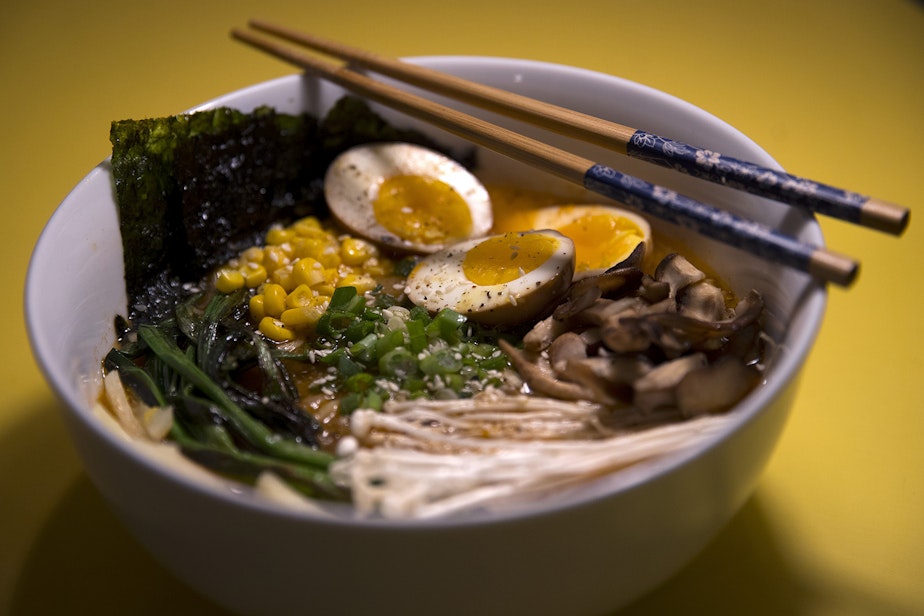

Lopez Island chef Josh Ratza wrote the book about taking ramen to the next level. In "Elevated Instant Ramen: Inspiration, Ideas, Ideology," Ratza explores the art and nuance of the ramen hack.
It turns out, even a brick or styrofoam bowl of instant noodles can become a gourmet meal on a budget if you know where to look and what to add.
In the latest episode of "Seattle Eats," Ratza takes host Tan Vinh on a unique and surprising ramen journey.
"I like to break rules," said Ratza, who runs Setsunai Noodle Bar on Lopez Island. "I like to try to challenge myself to try new things and explore looking for new flavors and tastes and having those packaged ones already there gives me a chance to try something different."
Ratza's ramen hack begins in the grocery aisle and ends, in this case, with him cooking a gourmet ramen meal (complete with Spam) on a cookstove in the open hatchback of his Subaru Outback in the parking lot of Uwajamaya, Seattle's incredible Asian market and grocery store in the heart of the Chinatown-International District.
Here are the steps he took to get from a brick of noodles and a flavor packet to a well-balanced meal worthy of cloth napkins and fine wine.
Sponsored
1. Pick your ramen style
Brick ramen works best for adding ingredients, but working from a brand served in a Styrofoam bowl can be helpful if you're at work, on the run, or camping.
"I'm a block-style shopper because I don't love Styrofoam, but I will in a pinch because it comes with a bowl," Ratza said. "But if I'm taking it home, I'm gonna stick on the block side."
RELATED: J. Kenji López-Alt’s quest to eat at every teriyaki restaurant in Seattle
In addition to choosing brick or bowl, ramen shoppers (especially at Asian markets) have the option of thin and thick noodles, which basically comes down to personal preference.
Sponsored
"I'm a thin noodle guy," Ratza said. "More broth comes up with it because you've got more space in between the noodles to bring up flavor to your mouth. Also, it's a textural thing."
2. Try different ramen flavors and brands
The four original styles of ramen are shoyu (soy sauce), shio (salt), tonkotsu (pork bone broth), and miso (fermented soybean paste). In grocery aisles that are not Asian markets, shoppers could be limited to flavors such as chicken, beef, soy sauce, and chili, with variations such as chili lime shrimp or spicy beef/chicken/pork. Those packets contain salt, MSG (monosodium glutamate), dehydrated vegetables, spices, and flavor enhancers.
One flavor that caught Ratza's eye was black garlic oil, which adds a smoky, savory, umami-rich taste to the broth.
In terms of choosing brands, Ratza has his favorites but said there's not a lot of variety because ramen is so basic.
Sponsored
"Some of the companies have better noodles than other ones for sure," he said. "But it's such a small margin because it's the same three ingredients: salt, water, and flour."

3. Keep ingredients on hand to boost flavor
Key flavor boosters include chili crisp, hot sauce, and furikake, which is a dried condiment that typically includes dried fish, sesame seeds, seaweed flakes, sugar, and salt.
Ratza takes ramen to the next level with coconut cream and even crushes ramen to form a crust for his chèvre cheesecake.
Sponsored
4. Add fat and protein
To stick with the college dorm approach to ramen, Ratza recommends tinned meat, such as tuna or chicken.
"Because they're shelf stable and if you're a college student, you don't have a fridge," he said. "Or if you do, it's so tiny and full of rotten food."
RELATED: See Ya B.C.! Bellevue is a Chinese food lover’s dream
For those who do have access to a fridge, he recommends mixed greens, avocado, and scallions, to help convert the ramen from a quick carb hit to a more nutritious meal.
Sponsored
"At its core, it's not very good for you," he said. "The way to make it better for you is to start adding some fats and other things that are in your refrigerator that you have access to, to make it a more balanced meal."
5. Use up whatever you have in your fridge
This could include using up vegetables, like broccoli or cherry tomatoes.
Ratza also likes to add an egg to his ramen for the protein boost. He sometimes fries the egg or even poaches it by cracking it directly into the ramen broth.

6. Think outside the box
For an impromptu "Iron Chef" challenge (made tailgate-style in the parking lot out of his open Subaru hatchback), Ratza prepared a cheese ramen that he combined with chrysanthemum greens, Spam, cherry tomatoes, and a touch of Kewpie mayonnaise, a popular Japanese condiment with a rich, tangy flavor.
"The Spam makes it really delicious," Ratza said.
Total cost: $21 for four meals.
"You might actually have some cherry tomatoes left," Ratza said. "But there definitely would not be any Spam left."
-
Tan Vinh

Food and Drink Writer, Seattle Times
Tan Vinh is the food and drink writer for The Seattle Times. Tan has won numerous regional and national awards for restaurant criticism and most recently took first place for excellence in food writing from the Society for Features Journalism.
More stories from Tan Vinh » -
Clare McGrane

Senior Producer
Clare is the senior producer and co-host of Control F, a podcast about the data that shapes our daily lives. Clare and co-host Teo Popescu answer big questions about how our world works — from your personal finances to the morning weather report — by digging though data. Clare is also the show's senior producer, managing Control F's production schedule and listener engagement.
More stories from Clare McGrane » -
Stephen Howie

Senior Online Editor/Reporter
Stephen Howie is a Senior Online Editor/Reporter at KUOW. He is an award-winning journalist, nonfiction writer, college professor and videographer. His first book, "The Bluffton Charge: One Preacher’s Struggle for Civil Rights" won the Mammoth Books Nonfiction Prize.
More stories from Stephen Howie »


